Wednesday, November 2, 2016

The 4-Step Plan to Construct Your Own Keyword-to-URL Map

Posted by Carson-Ward

Knowing how to find and effectively use keywords is probably the most important skill for an effective search marketer. Smart keyword planning and tracking should also heavily inform content planning and strategy. Unfortunately, most keyword research is done on the fly as a new page is created. Rather than helping marketers find new opportunities and plan strategically, keywords are usually found and applied to existing posts and in-flight projects.


If you're an SEO or content creator and don't have a living, regularly referenced keyword map, this post is for you. We won't discuss how to optimize existing pages. There are lots of well-done technical SEO posts around if the optimization process is new to you. But if the concept of a keyword plan is new to you, this post should walk you through the process completely. If you're experienced, you'll probably pick up at least one new trick or application for keywords.


If you'd like to follow along with a keyword research template I've created, feel free to make a copy of this Google doc. You'll see images of it throughout the post that might make more sense if you open it up.


Finding and selecting keywords


Obviously the first step to using keywords is finding what people search for. While thorough and hopefully helpful, there's nothing shocking or ground-breaking in this first section. The real magic is in how you use your keywords.


Step 1: Build the “Big List”


Your goal in this first phase of keyword research is to gather every keyword that your business would want to appear for. You won't achieve that goal, but set your sights high. Think outside the structure of your current site. Look beyond keywords you currently rank for and knowingly compete for.


Moz Keyword Explorer


Moz's Keyword Explorer is a great tool, and I'm not just saying that because of Moz's resident hypnotist. I must have missed its launch somehow, yet it's quickly become my first stop for collecting lots of keywords quickly. The grouping function is great for finding head terms, and the sub-terms will be useful later on in either optimizing terms on existing pages or finding related pages worth creating.


Here I'm using the Moz keyword tool and excluding very low-volume keyword terms that I know I'll be ignoring. Throughout this post I'm using our site, HighSpeedInternet.com, as an example.


Put in your known head terms and export them all using the “Export CSV” function. I'm impressed by the speed of the tool, and often use volume filters to avoid exporting terms I won't actually use. That might sound small, but many tools force large exports prior to any estimation of search volume. Once you're done gathering and exporting, you can remove duplicates and sort using Excel or a (slightly clumsier) Google Sheets script.


SearchMetrics


SearchMetrics is good for those who aren't sure which keywords they want to rank for. We'll need to input competitors' sites to find keywords. For those who don't know who competitors are, there's a handy tool that shows likely candidates under “SEO research > Competitors.”


SimilarWeb (not shown) is also helpful in checking for competitors. If your site is new, simply plug in some of the queries you'd like to rank for and look those sites up. Once you've discovered some competitors, throw them into SearchMetrics and head over to the “Rankings” section under “SEO Research” and click “Long Tail.”


If this were a competitor's site, I'd see a list of keywords they rank for and the potential traffic.


Other tools


  • SEMrush has a tool that can find keywords with search volume by site or related terms. One of the better all-in-one tools for keyword research.

  • UberSuggest spits out tons of related terms. It's no longer a favorite, as many have found suggestions to be irrelevant or low-volume terms.

  • KeywordTool.io is a good complement to a more full-featured tool. It's reliably better than most tools at finding mid-tail terms that others don't find.

  • Google Keyword Planner offers free suggestions. One major downside is that your competitors will probably be using the tool the same way you do, resulting in lots of competition for the more narrow set of terms that Google suggests. Still, it would be fine to use this tool and nothing else if your tools budget is low.


There's an almost unlimited number of keyword tools, but you really only need one or two. The more thorough your Big List process is, the more work you'll save yourself later on. It's usually worth it to spend a day or two gathering lots of keywords for a site you'll be working on regularly.


Step 2: Get keyword volume


Use Excel's handy function or a Google Sheets script to remove duplicate keywords. For most of us the next step is to import/paste sets of keywords into the Google Keyword Planner, export the volume, and repeat. There's a limit to how many keywords Google will allow you to run at one time, so pre-filtering bad keywords might be a good idea. For example, I often pull out competitors' branded terms.


Work-around for “low-volume” accounts (+extra precision)


Google recently continued its creeping war against those who use Google products for free by returning ranges in the keyword planner for low-spending accounts. These ranges (as in the image below) are so broad they're essentially useless for anything but pre-filtering.


To get around this limit, you can just click the nice “Add to plan” button on any one of your terms.


If you're only curious about volume for a few keywords, you can just click the “Add to plan” button for multiple terms. It's easier to paste them in the next step for larger lists. Once you've added at least one keyword, click the “Review plan” button.


Now you're on a new page where you'll need to be careful about avoiding the “Save to account” buttons unless you actually want to start bidding. Click “Add keywords” to paste your terms in, then save it to a new ad group.


Now click the ad group. You'll see a large table that's mostly blank. Fill in a $999 bid and set the range to monthly. I also like to try different match types, but I typically use exact-match.


So why is this cool?


  • Impression count is more accurate, and not rounded like in the regular tool.

  • You can set custom date ranges if you want a more accurate figure for forecasting purposes.

  • You can play with match type again (which is something Google took away from the standard planner interface).

  • It works for free accounts.


At the end of Step 2, you should have a simple two-column list.


Step 3: Filter keywords


Notice I said we should filter keywords - not delete them. You'll generally want to break keywords into three groups:


1.) Priority terms: Keywords you want to rank for immediately. A good priority term has the following attributes:


  • Related to current and near-future business

  • Implies a question you can answer well about a product you sell, OR implies a need you can fulfill

  • High-enough volume to be worth the investment


2.) Secondary terms: We'll want to go after these some day, but not before we have our priority keywords locked in with query-responsive, well-optimized pages. Secondary terms usually have the following traits:


  • Doesn't have buying intent, but has healthy volume and relates to what your site does

  • Implies a question you don't have the expertise to answer

  • Low-volume terms that might convert


3.) Other terms: You might lay out some tertiary keywords (i.e those where you plan to expand the business), but you can generally stop there and label any others as keywords to “ignore for now.”


You'll usually want to note why you are or are not pursuing a term so you don't have to re-evaluate it every time you look for new keywords. Step three's endpoint just adds a few columns:


Using keywords effectively


Now that you've gathered keywords it's time to figure out how to use them. Your ultimate goals are to 1) find new opportunities on existing pages, and 2) find keywords for which you don't have a good landing page so that you can create or suggest a useful new piece of content. Before we can do either, we'll need to map the keywords to pages on your site.


Step 4: Map priority keywords


Just like you needed human judgment to determine priority keywords, you'll need to use good judgment to map them to pages. You can skip the judgment steps and still come out with a final product, but it will ultimately be far less useful. Besides, this is why we have jobs that machines won't be taking over for a while.


Scrape Google


First, scrape Google for your keywords and current ranking. Google frowns on rank tracking and SERP scraping, but consider it fair game for all the content they scrape and save. If you don't want to scrape SERPs you can manually map each page, but it's nice for larger sites to check yes/no rather than thinking through a list of potential pages every time.


There are tons of tools and services for this. AWR is probably the most common choice, as this is a one-time deal. You could also write a simple script with proxies or find a freelancer on one of a dozen sites. Moz Pro's campaigns work up to your keyword limit, but the Moz tool is far better at helping after you've mapped keywords.


Mapping new & existing URLs


Once you have each keyword's page and current rank, you'll want to quickly check that the page matches the query.


  • How does this page help the user? (Don't confuse this with what the user does next.)

  • Would the ideal version of that page do what you'd want if you typed this keyword into Google?

  • Would a page about this keyword or set of keywords only serve the query better?


You don't want to create new pages for every tiny keyword variation, but we do want to make sure the page feels tailored to the user question. You're trying to close the gap between what people want from Google and what your site does, so it shouldn't be surprising if the questions you ask yourself feel UX-heavy.


After asking these questions a few hundred times it'll become second nature. You won't rank at all for some terms, so you'll have to either manually select a page or create a new one. For some pages (especially those 50+), Google will just be plain wrong and you'll have to re-map them.


The hardest choice is often whether an existing page could be optimized to be a better fit, or if a new URL is more appropriate. As a general rule, anything that would augment an existing page's core purpose can be added, but anything that would detract or confuse the core purpose should be placed elsewhere. Don't worry if it's not immediately clear what the core purpose of the page is. Part of the value in this process is refining page purpose with keywords.


If you have a page in the top 5 or 10, it's usually best to assume optimizing the page is a better path than creating a new page. If you have sets of conflicting keywords (meaning optimizing for both confuses the page) ranking on the same URL, you can generally choose the higher-value terms and then link to a new page about the second set.


For example, if we had a page appearing for “internet providers by zip code” and “satellite internet providers,” these would be considered conflicting. Trying to talk about satellite Internet (which is available almost everywhere) and zip code-specific Internet at the same time would be confusing. We'd create a new page for satellite Internet, delete the existing satellite Internet content, and link to the new page from the ranking URL.


Building new pages


If you've identified new pages that have opportunity, well done! Ensure that the amount of effort is worth the reward, and utilize the opportunities in your production process. Keyword research done well comes with a built-in business case. If you can show keyword volume and argue for keyword intent, you only have to make some assumptions on click, call, or purchase rates to put a potential dollar figure on the project.


Once you've mapped keywords to a new page, you should also have scope settled at a high level. Knowing what questions you're trying to answer and what the page should do gives everyone the information they need to contribute and determine the best way to build it.


Optimizing existing pages


Improving existing pages is usually easier and less time-intensive, but don't simply optimize page titles and call it a day. Actually look at the page and determine whether it's a good fit for what you'd want to see if you were the one Googling. Also consider the competition and aim to be better.


There will be a larger list of existing terms ranking below the top spot where optimization and improvement need to be prioritized. Here are a couple examples of prioritization helpers:


  • Keyword opportunity: Find a click-through study, estimate the traffic you're getting in your current position, and estimate how much traffic you'd get from the top spot. Consider both keywords and pages.

  • Competitive opportunity: Combine the opportunity above with competition metrics (e.g. PA/DA in the SERPs).

  • Crawl your pages to get titles and content, break the keyword into its individual words, and see how many of the words appear.


Use these figures as guides, and be smart about competition. It's easy for analytical people to get too deep into a spreadsheet. Make sure you're looking at your website and that of your competition, rather than making decisions on a pet formula alone.


A word to skeptical content strategists/marketers


I understand if you think this looks like a post for SEOs. Content that comes from highly searched keywords tends to be evergreen, but the result of writing keyword-targeting content is rarely something your visitors will rush to share. It's very rarely inspiring, timely, fun, or otherwise sexy. Keep some things in mind, though:


  1. Depending on who you believe, organic traffic on average is 2–4x average referral traffic across the web. Don't sell yourself short with a content strategy that only reaches half of your potential audience.

  2. You don't have to create content the way everyone else has. In fact, please don't! See a bunch of dull articles ranking for the term? Maybe make it an interactive tool. Write something that's not dull. Answer the question better than anyone else has.

  3. You'll drive more sales creating good content for boring searches than you will creating viral posts that get shared and linked to. Combine keyword hunting with shareable content for a truly business-changing organic/inbound strategy.


You don't need an SEO's permission to create useful content for things Google explicitly tells you your potential fans and customers are looking for. Incorporating a keyword strategy into a comprehensive content strategy almost feels like cheating.


Getting started: A spreadsheet template


If all of this sounds a bit overwhelming, I've created a template in Google docs that you can begin using. Just choose “File > Make a copy,” read through the comments, and start entering in your own data once you feel comfortable.


Get your keyword mapping template


The Google doc does a lot of the boring stuff for you, like calculating keyword opportunity, title optimization (if you put in page titles), and organizing your keyword map by page and keyword with opportunity, volume, and more.


When it's time to automate


There are tools for doing much of what this spreadsheet does. The right tool will be worth the money as long as you keep some things in mind before you dive in and start paying:


  1. It's wise to know what you want a tool to do before buying it. Use the keyword mapping template, experiment with what you actually want and use regularly, and then you can start looking for tools to help you map keywords and optimize pages. Avoid tool clutter by using them deliberately.

  2. Most tools will try to map keywords to pages, but none can reliably tell you when or how you should create new content. If you're never actually looking at keywords with human judgment and asking, “Am I answering that query?”, then you're probably over-relying on the tool.


For Moz Pro members, plugging in some keywords and playing around is a great place to start. Play around until you're comfortable with rank tracking and page mapping, then look at some optimization suggestions. It's now even better when combined with the keyword tool.


Sign up for The Moz Top 10, a semimonthly mailer updating you on the top ten hottest pieces of SEO news, tips, and rad links uncovered by the Moz team. Think of it as your exclusive digest of stuff you don't have time to hunt down but want to read!

SearchCap: Yandex Palekh algorithm, Yext reviews & more search

Below is what happened in search today, as reported on Search Engine Land and from other places across the web.

The post SearchCap: Yandex Palekh algorithm, Yext reviews & more search appeared first on Search Engine Land.


Please visit Search Engine Land for the full article.


Tuesday, November 1, 2016

How to Use Twitter Polls to Engage Your Audience: 13 Examples From Real Brands

Twitter Polls.jpg

It's been a year since Twitter polls became an option for users to engage, entertain, and survey their social media audience. And just recently we've found ourselves asking, “Are there any brands out there that are really using Twitter Polls well?


In the not-so ancient past, Twitter users used to tweet out makeshift polls and use likes, retweets, or replies to get their “results.” It was a way of engaging with followers over timely events, random questions, and product promotions.


Yet, without real-time voting options and results, these makeshift polls weren't all that valuable. In fact, they were just like any other tweet meant to drive engagement.


Thanks to the introduction of Twitter polls, all that's changed. We'll walk you through how to set up a poll below, and provide some inspiring examples to help you plan one of your own.


How to Create a Twitter Poll


1) Click the 'Compose a Tweet' button in the top right-hand corner of your homepage.


tweet button-2.png


2) Click the “Add Poll” option in the dialogue box that pops up and write copy for your polling question.


compose new tweet.png


Include relevant hashtags, @mentions, and links. Polls are just like any other tweet, just with the added polling feature. Keep it short, clear, and engaging.


3) Add at least two choices (up to four) on your poll.


add choices.png


Dress your options up with emojis or witty options to show off some personality and catch the attention of folks scrolling by.


4) Set the length of your poll.


time limit.png


5) Click “Tweet” and watch your poll results come in during the set time period.


When the time period you set ends, you'll see a “Final Results” display in the Tweet, like this:


rand-1.png


Couldn't be easier, right? So now that you know how to actually use Twitter polls, it's time to dig into how you should use them to engage your audience, gain insights into your follower base, and provide context around your marketing campaigns and efforts.


Luckily, we've curated examples from 13 brands to give you ideas for how to use Twitter polls to engage, delight, and entertain your followers.


13 Examples of Clever Twitter Polls From Real Brands


Generate Follower Insights


While Twitter polls aren't really a reliable way to find sophisticated market data, they can be used to engage your audience by asking for follower insights.


1) The Muse


Muse.png


The Muse is a career advice and job searching site focused on providing job-related content to people looking for it. This particular poll serves as a stand out piece of social content that's not only relevant to the audience, but also aims to generate engagement through votes, retweets, and likes. What's more, the results of the poll should offer interesting insights to inform future content.


For example, if the #1 answer ends up being “fewer emails," The Muse could write a blog post around helping people clear out their inbox.


2) Eventbrite


Similarly, Eventbrite's poll also aims to collect follower insights related to holiday seasonal habits.


eventbrite-3.png


Given that Eventbrite posted this poll in October, it's probable that this poll was in part a strategic tweet aimed at getting its target audience thinking about holiday event planning. Yet, the results can also be used to help frame content or generate new holiday campaign ideas.


Engage Your Followers' Interests


Ideally, your Twitter followers fit your general buyer persona, which means you should have a strong grasp on the content they like to consume, as well as their interests. You probably already use this information to create your social media strategy, so why not tie polls into that strategy, too?


3) Product Hunt


Product Hunt is a content curator that collects and reviews the latest apps, tools, technology, and more. As a hub of tech-information, it curates and posts content for people interested in the tech industry, hence the following tech television-inspired poll:


product hunt.png


While this kind of poll may seem silly and goalless (especially compared to some of your other tweets that may help you drive leads and blog views), it ultimately helps Product Hunt create a positive brand perception and generate audience engagement.


4) Urban Outfitters


Urban Outfitters also played off their audience's interests with this fun, seasonal poll:


urban.png


These types of polls might just be for humorous purposes, but again we can see here how Urban Outfitters might be pairing their tweet messaging with seasonal, autumn promotions. But rather than just Tweet Fall content, they've created a Tweet that more effectively encourages engagements.


When thinking up copy for your own Twitter polls, don't forget to think about timing when it comes to surveying your followers. If you're tweeting a poll to business professionals at midnight, you're unlikely to get nearly as much engagement as you might if you were Tweeting the poll during commuting hours. This kind of mindset is helpful when it comes to planning when to schedule your Twitter poll.


Want help choosing the best times to post on social media? Check out this infographic.


5) Evernote


In this next example, Evernote used timing as a part of its poll by asking what agenda item they tend to tackle first at the very beginning of the week:


Evernote Twitter Poll.png


This tweet is a great example of using timing to engage your audience, but it's also an example of a way Evernote suddenly encourages users to use its product. If a business professional is scrolling through Twitter and decides to create their to-do list for the week because they see this poll, they might decide to open up Evernote to do just that. It's a great way to keep your products at the top of your followers' minds.


Take Advantage of Timely Events


One of the best ways to take advantage of polls is by using timely events -- holidays, sports events, news stories, viral hashtags, and so on -- to engage your audience.


Because Twitter users are already tweeting about these types of events organically, using polls to entertain them or add to the conversation is a strong strategy.


Want to see it in action? Here are a few examples of brands that newsjack events by using polls.


6) Domino's


As you've likely already noticed, there has been no shortage of political tweets being exchanged lately. During one of the presidential debates, Domino's decided to tap into the conversation by posting the following poll:


dominos.png


By using a timely event, Domino's effectively tied the conversation around the debate back to the brand to entertain its followers (and hopefully encouraged a few of those voters to order pizza during the debate).


7) Refinery29


Refinery29 -- a women's news and entertainment media source -- posted the following poll during Breast Cancer Awareness Month to ignite a conversation amongst its followers:


refinery.png


This kind of poll is great because it's relevant to the brand, sparks interesting conversation, and engages with the overall Breast Cancer Awareness Month conversation.


8) Dunkin Donuts


Another great strategy? Pay attention to timely events that are relevant to your brand. Check out how Dunkin Donuts used a holiday-inspired poll to engage its audience on #NationalCoffeeDay:


dunkin donuts.png


Pretty clever, wouldn't you agree?


Encourage Predictions


Using timely events is one way to generate engagement, but you can also ask for relevant predictions through polls based on those timely events. Think about sports events or any other competition that might be relevant to your brand. Are your followers and target audience engaged and watching to see who wins something? Is it relevant for your brand? Use polls to ask for predictions and drive engagement before and after the event.


9) NFL


In this example, the NFL asked users for their predictions on who would win the game between the Minnesota Vikings and the New York Giants:


NFL.png


Considering the National Football League was asking for predictions on a professional football game, it makes sense why this prediction is relevant to their brand.


The lesson? Look for ways to poll for predictions that make sense for your brand, and always keep in mind the goal of engaging your audience based on what they're interested in.


Let People Choose Products, Features, etc.


Twitter polls offer a great way to drive engagement and buzz around an upcoming product or offer launch by giving your followers a choice in the matter.


10) eBay


Here, eBay asked its followers what they were more excited about: 50% off an Apple Watch deal or 40% off Fitbit Charge HR:


ebay.png


Keep this poll idea in mind the next time you launch a new product, event, deal, offer, etc. By letting your followers have a say in your launches, you'll get them more excited and bring generate positive associations toward your brand.


Promote Offers, Live Events, etc.


Here's another helpful idea: You can also use polls to set context for your marketing campaigns, content, and offers.


11) HubSpot Academy


In this example, HubSpot Academy used a pop quiz-style poll to set context for the Inbound Sales Certification:


hubspot academy-Twitter-poll.png


Whether you're promoting a blog post, an ebook, or some other offer, try asking engaging questions that set the user up to click the link and find the answer.


Aim for Delightful Brand Relevancy


Believe it or not, using polls to delight your audience with branded questions goes a long way when it comes to entertaining and engaging your audience.


12) COVERGIRL


COVERGIRL -- a makeup and beauty brand -- used this clever poll to get its audience thinking about its products:


covergirl.png


When trying to delight your audience, don't be afraid to have fun with it. As shown by COVERGIRL, not every tweet needs to be about generating leads or page visits -- in some cases, polls are simply a great way to encourage brand awareness.


13) Cheesecake Factory


Here's another great example of a brand-relevant poll by Cheesecake Factory:


cheesecake factory.png


Simple, yet delightful polls (like this one) are a great way to create positive brand perception and awareness. And the more fun and engaging the poll is, the more opportunity to have to effectively expand your audience reach on Twitter.


Best Practices for Creating Twitter Polls


You now know how to use Twitter polls in practice, and you've seen some great examples of brands that are using polls to engage and delight their audiences. At this point, it's time to take this information and create relevant, timely polls for your own audience.


Still need a few last minute tips? Here are some best practices to keep in mind:


  • Don't be too serious. Twitter polls aren't meant for mass market research. They're meant to be fun pieces of engaging social content, so use them as such. Ask questions that your followers want to answer, not just questions you want to know.

  • Use hashtags. Want to use polls as a part of your marketing efforts around an event or launch? Don't forget to include hashtags and links in your tweet copy.

  • Keep timing in mind. Just like any other social post, you should be posting your polls when followers are going to see it. Check out this blog post on the best time to post on social media -- but don't forget to dig into the data on when your followers are using Twitter.

  • Set context for your marketing campaigns. Polls are a great way to set context for your other content marketing efforts, events, or product/campaign launches. Ask your audience questions that set context for your campaigns and generate buzz for your content or launches.


What's the best Twitter poll you've ever seen? Share your thoughts in the comments below.


free kit for growing followers on Twitter

We Used the Latest Holiday Selling Data to Create These Cyber Monday Hacks

I've always been a little skeptical of Cyber Monday. It always felt a little forced. Black Friday is a media bonanza as well, but Black Friday always seemed more discovered than created.


Cyber Monday on the other hand came off a bit manufactured. I figured that while there were certainly sales to be made from an ecommerce-centered selling holiday, the real money in online sales would be made on Black Friday as buyers become increasingly resistant to the Black Friday hype machine.


So, we pulled the data. We wanted to see how Cyber Monday works and what makes it tick. Inventory tracking is our bread and butter, so we maintain a multi-tenant database comprised of sales data from our ecommerce business owners. That's millions of sales. This gives us an overview of general trends within the industry across marketplaces, platforms, and niches. We extracted an SQL query of all sales data between November 25th and December 2nd minus POS systems, ensuring that our conclusions would be specific to ecommerce.


The goal? Discover what's fact and what's opinion behind the Black Friday vs. Cyber Monday debate and create a seller resource that allows retailers to be more methodical in their Cyber Monday strategy.


And I have to admit that looking at these data reports had me replacing my turkey with a big helping of crow. Cyber Monday is king.


Focus Your Efforts on Cyber Monday


ecommerce-sales-week


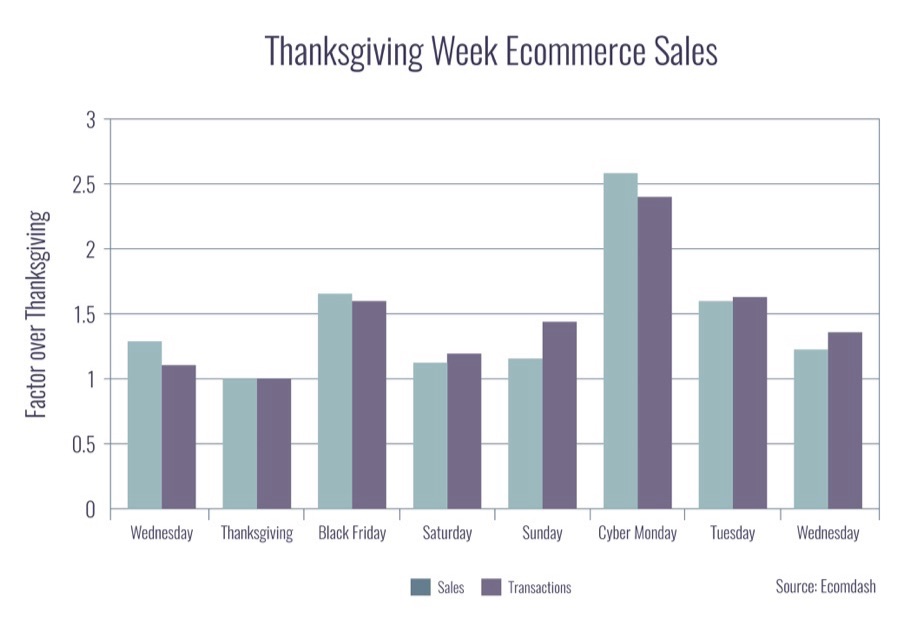
The buying public is biting hard at the Cyber Monday lure. While Black Friday does stand tall with over 1.5 times the sales and transactions of the previous day, Cyber Monday towers over the entire week, sticking out like a pimple on prom night. Nearly 2.5x the sales and transactions occurred on Cyber Monday as on Thanksgiving Day. In fact, the Cyber Monday fallout stretching into Tuesday is nearly as good of an e-tail day as Black Friday.


But what does this all mean? How can you apply it in 2016 to increase your sales and maximize on perhaps the most important week of the year for your business?


Here are four actionable tips to get you started. These don't require any expensive software systems or a huge amount of expertise, but they go a long way on capitalizing off the data-proven buying habits of shoppers during the first week of the holiday season. I've also provided some great examples of Cyber Monday sales from throughout the years from deep in my inbox. For extra fun, I only picked examples that personally made me convert. Let's dive in.


Have Your Email Marketing to Inboxes by 6AM


The first thing I do every morning is check my email, and I'm not the only one. Smartphone usage for email spikes in the morning around 6AM according to data compiled by Movable Ink.


email-opens-by-device-time-of-day


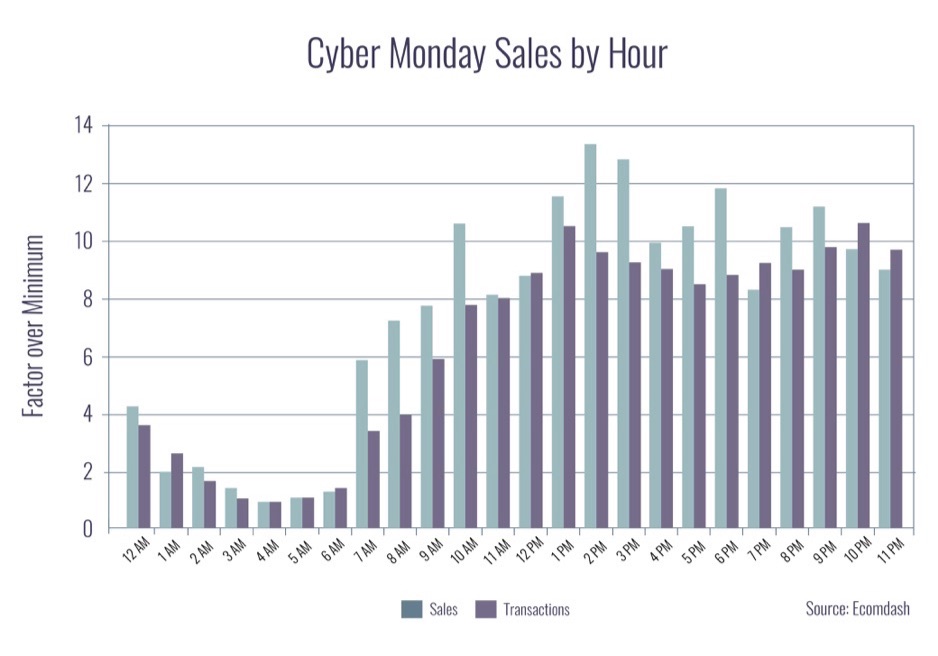
That explains why our data found that Cyber Monday begins at 7AM. People are waking up, immediately checking their phones, and making purchases. The sales eclipse the transactions for the next three hours, indicating customers may be more receptive to your email marketing efforts for big-ticket items in the morning.


cyber-monday-hourly


Data found by Marketing Charts drives the point home further. Average email open rates begin their daily upswing at 6AM and peak at 10AM.


open-rates-by-hour-marketing-charts


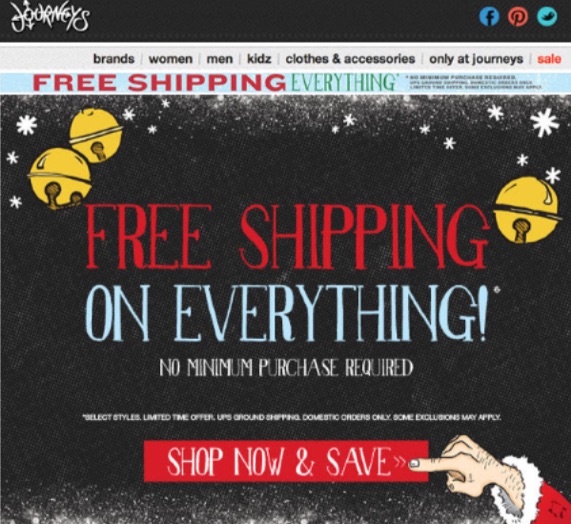
By the time your potential customers wake up, you need to have you email marketing efforts right in front of them. Why waste time? Feature your biggest ticket items and your best sales right off the bat. This example from Journeys hit my inbox at 2:10AM. It caused me to buy a pair of cream-colored Converse All-Stars. It shows us a couple of great ideas about how to cut through the sleepiness of someone's brain and claim an early morning conversion.


journeys-free-shipping


What I find really interesting here is that Journeys doesn't include a product photo. The email sells the deal rather than clothes. It reads as almost more of an announcement than an advertisement. There are three more replicable techniques for an early morning Cyber Monday email we can find here.


  1. Make the offer provocative and enticing. Words like “free” and “X% off” are sure to wake up your customers.

  2. Shove that offer directly and explicitly at your reader. Big, bold letters are a must.

  3. Dark colors that won't blind your reader are a great idea. An email with a lot of bright colors might hurt their eyes and cause them to put down their phone.


Advertise a Lunch Break Flash Sale on Twitter


Going back to our hourly data, we can see that the most money is being made around lunchtime. 1PM to 3PM is the largest peak you'll see throughout all of Cyber Monday.


Conveniently, Hubspot has found that 12PM to 3PM on weekdays is Twitter's most active period. Launching a 12-hour flash sale on Twitter at 12PM is a great way to get a great deal in front of the most customers at the time when they're statistically most likely to convert. It's a trifecta of data-driven methodology.


Use the hashtags #cybermonday, #flashsale, as well as any other relevant hashtags for your brand. Include an image, especially if you're able to include it as an embedded link. I bought this wonderfully nerdy t-shirt for an English teacher friend of mine last Christmas. I was browsing the #flashsale hashtag on Twitter during my lunch break. The limited time offer and the fact my lunch break was also limited increased my urgency, leaving me less time to waffle and potentially abandon my cart.


Perhaps you're a little wary of putting eggs into your social media basket. You've got that big fancy email list, but perhaps you've relied on it a little too much. Keep in mind that your customers are going to be bombarded all day with sale after sale in their inbox. You don't want to blend into the background noise. Moving some of your marketing efforts over to social media gives you an opportunity to attract new customers on an open platform, Type A buyers who are looking for Cyber Monday sales. With that in mind, apply these three tips.


  1. Attach the flash sale to a lower selling item, or one in which you have excess inventory. Don't risk it on a high selling item, especially if this is your first flash sale.

  2. Use Twitter's audience management tools to create a targeted Twitter ad to promote your flash sale.

  3. The shorter the time for your flash sale, the more urgency you create for the buyer. On the other hand, they have less time to see the sale. It's a delicate balance.


Send Out an End-Of-Day Marketing Email


After the workday ends, customers begin to spend less money. The number of overall transactions spikes at 7PM as a result of people getting off work who perhaps are in jobs where they're not able to online shop on their lunch break. Similar spikes occur at 10PM and 11PM as the slowpokes among us suddenly remember its Cyber Monday, or finally have time to sit down and shop. That's why you should send out one more marketing email at the end of the workday to capitalize on this group of buyers.


“But what about bombarding my customers? Won't they get annoyed if I email them twice in one day?”


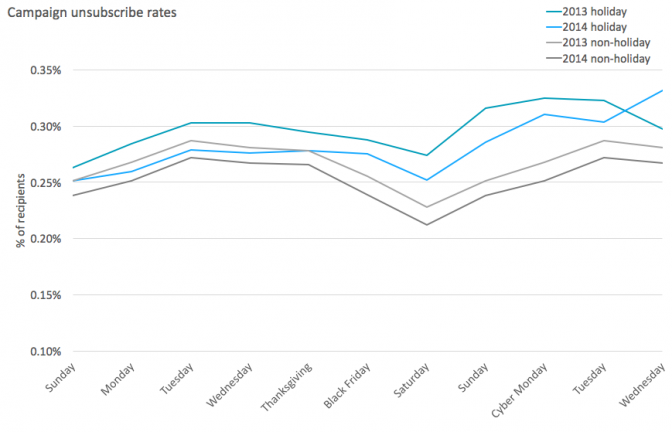
On Cyber Monday, they don't. MailChimp notes that the overload of email offers decreases open rates across the industry on Cyber Monday, but don't significantly increase unsubscribe rates. They go on to note that the best way to get noticed is to send more emails than normal. This is not the time to be quiet and hope you'll get noticed. There's too much money on the line to be timid.


campaign-unsubscribe-rates
(Image Source)


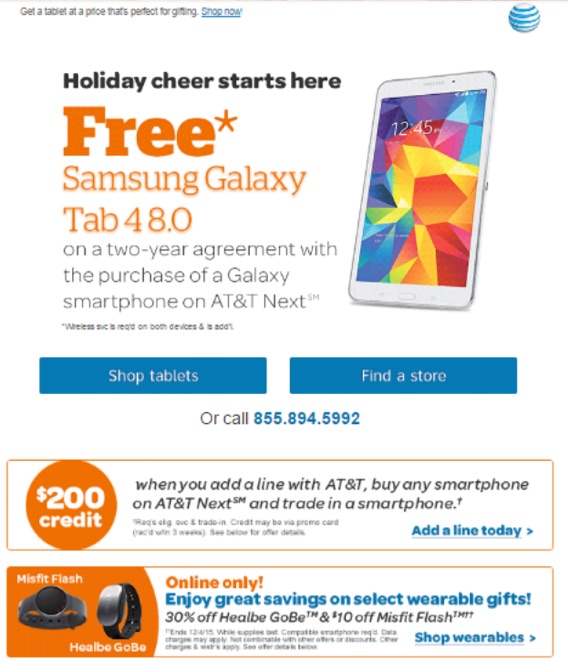
This sleek AT&T Cyber Monday sale landed in my inbox at 4:15PM. We were desperately trying to introduce some technology into my dad's life at the time, so this seemed like the perfect present. Notice how they lead with the FREE tablet. I also really like the messaging that this is where the holiday cheer is “starts,” as it implies a season's worth of deals and shopping is to come.


att-holiday-email-advertisement


Another key takeaway here is bundling your items. Since people seem to spend less in the evening, but the total transactions increase, it's important that you can get as much as you can out of each transaction. Bundling items together means you can charge more for each transaction.


AT&T is technically doing two different bundles here, one much subtler than the other. Not only are they bundling the tablet and the phone, but they're also offering a $200 credit. What could you use that $200 credit on? Maybe some of those wearables they advertise below. AT&T is not only bundling their products, but also bundling the sale itself. A three step series of purchases that starts with the headline FREE is great marketing from this mobile giant.


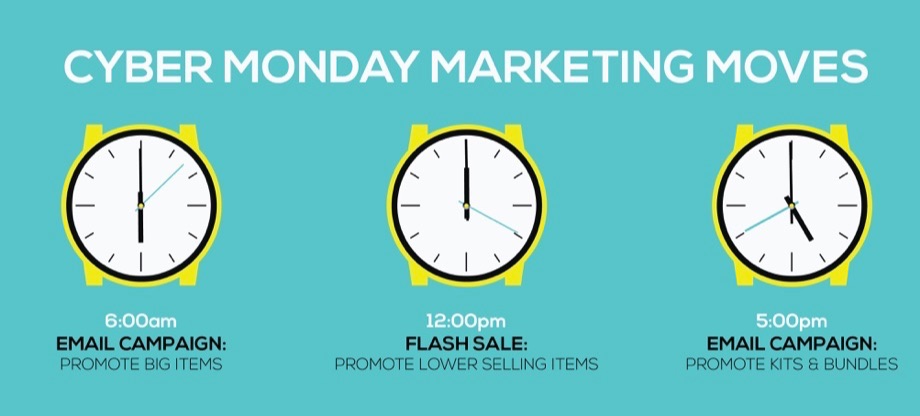
Getting one last email out completes a nice full days' worth of Cyber Monday digital marketing. Let's make sure we've got our Cyber Monday marketing timed out to perfection.


kissmetrics-watch


You've taken advantage of the early birds, the night owls, and the lunch… larks? Being an active seller throughout the day ensures that you're getting the most of out the holiday.


Allow Customers to “Earn” Free Shipping Rather Than Giving It Away to All


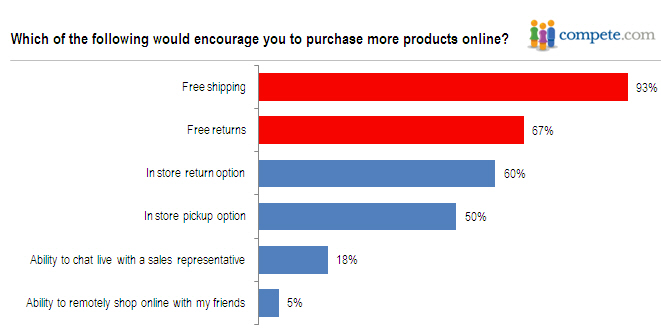
I'm a big believer in free shipping. What it does for ecommerce conversions is undeniable at this point. It's worth the cost. According to Compete.com, over 93% of customers cited it as a factor that would make them more likely to buy an item. The same study found that 38% of customers found the shipping cost to be the least satisfactory part of their shopping experience.


free-shipping-increase-sales
(Image Source)


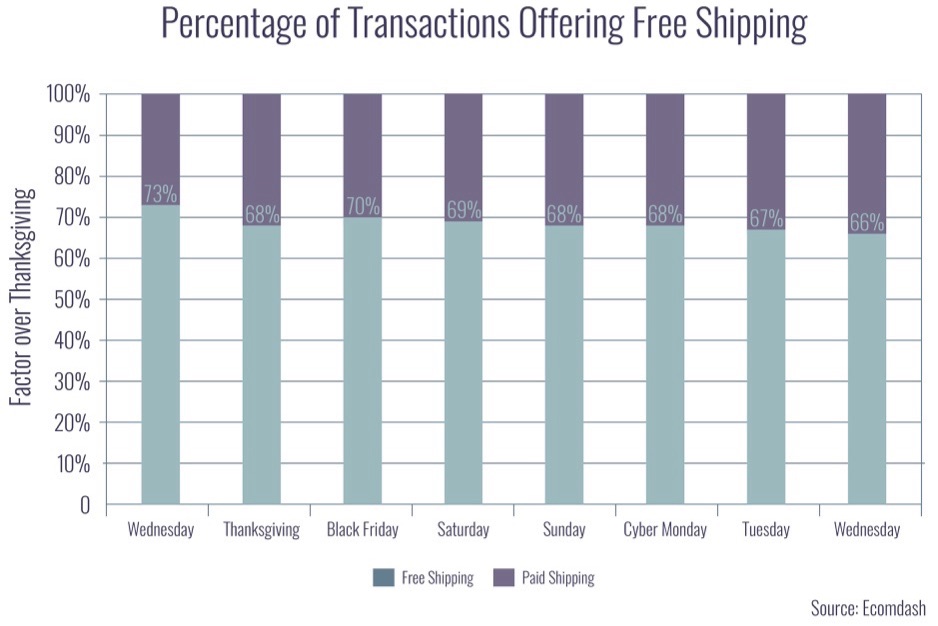
Our own research, however, appears to suggest perhaps buyers aren't as sensitive to shipping costs as they say they are. We found that offering free shipping does not move the needle on your sales throughout the week of Cyber Monday.


percentage-free-shipping


I've got two theories as to why this is. The first is that Cyber Monday may be attracting some non-traditional online buyers. Those of us who shop online often throughout the year know that if one vendor isn't offering free shipping, it's probably worth the time to find a similar item with a vendor willing to ship for free. Cyber Monday shoppers may not be familiar with this, so it doesn't become a major factor in whether or not they convert.


My second theory is that the event of Cyber Monday is outweighing the normal aversion to paying for shipping. People want to feel as if they are a part of something. It could make them less prudent than normal and more prone to paying for shipping, especially if they perceive the deal as being worth it.


Either way, we can make a few data-driven decisions based on this info. We could of course just take away free shipping altogether for the week of Cyber Monday. Customers are willing to pay for it, so we might as well just take their money, right? That feels a little wrong though, doesn't it? After all, the benefits of free shipping outweigh the negatives. It's good for the customers and the sellers.


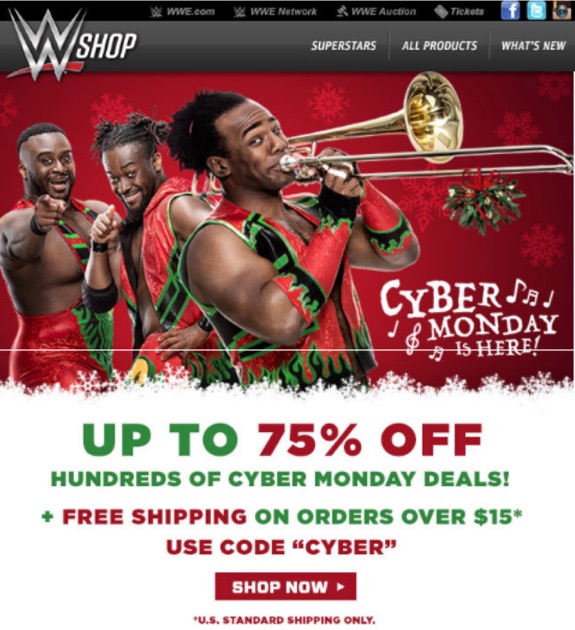
With that in mind, offer customers a chance to “earn” free shipping. Check out what WWE Shop sent me on a Cyber Monday a few years back.


wwe-shop-cyber-monday-sale


WWE Shop set the free shipping limit to $15. Doing something similar with your business will allow you to increase the value of each transaction. Buyers may spend more to get the free shipping, and transactions that remain below $15 will be less expensive for you to process.


Consider other ways you can allow your customers to earn free shipping, such as in exchange for filling out a customer experience survey, registering on your site, or bundling the item with a less popular item.


Conclusion


Let me sum up all these graphs and examples for you as simply as possible.


  • Cyber Monday is a phenomenon, not a flash in the pan.

  • Be methodical about your digital marketing to capitalize on sales spikes throughout the day.

  • Allow customers to earn free shipping rather than giving it away to everyone.


I think data is beautiful, especially data that makes us money. By going about your selling in a data-driven manner, you can take full advantage of Cyber Monday. We'll most likely see sales spike on this ecommerce holiday. But wasted motion is wasted money. Don't fumble around in the dark and hope you'll stumble on profit. Use these hacks instead, experiment to see which works best for you, and make Cyber Monday your best sales day of the year.


About the Author: Dion Beary writes about ecommerce for ecomdash, a software company that automates inventory management for small businesses selling online. His passions are Twitter, casseroles, and 00's rap.

SearchCap: Google communication, search ad growth & SEO

Below is what happened in search today, as reported on Search Engine Land and from other places across the web.

The post SearchCap: Google communication, search ad growth & SEO appeared first on Search Engine Land.


Please visit Search Engine Land for the full article.