Wednesday, March 30, 2016

How to Idiot Proof Your Ad Campaigns

Marketing promotion sucks when you treat people the same.


That goes for conversions, and it goes for advertising too.


But the minute things start to go awry, people start messing with their landing page headline or ad descriptions.


As if those tiny, miniscule elements are the primary reason traffic's not comin' or visits aren't convertin'.


The best landing page, optimized 100% correctly, can't make up for the wrong audience seeing that message.


Ad campaigns are already difficult. But the good news is that you don't need to possess ninja PPC skillz.


Instead, here is a dead simple way you can isolate where problem areas might pop up and stop them dead in their tracks.


When 'Best Practices' are Good Enough


Commonly accepted best practices are a starting point. The tip of a metaphorical iceberg.


They get all the attention and ink online. But there's a mountain below just waiting to sink your campaign.


On a GREAT day, landing pages convert around 10% of visitors (and those are the 'uncommon', special ones that vastly outperform all the rest). That means the majority of page visitors are doing, well, anything else besides converting.


Slapping on a different ad-description isn't going to budge that number. It won't change the fact that those people simply aren't ready to buy. It might get you from 6-7%. Which is great!


But in a world where over 50% of all customers interactions follow a 'multi-event, multi-channel' journey that takes various touch points prior to converting, we should look beyond tactical 'best practices' to make sure the entire funnel aligns to deliver the best conversions for our buck.


Managing the growing complexity is a top priority for marketers, with most juggling anywhere from 5 – 31 separate tools to manage messaging in a multi-channel marketing environment.


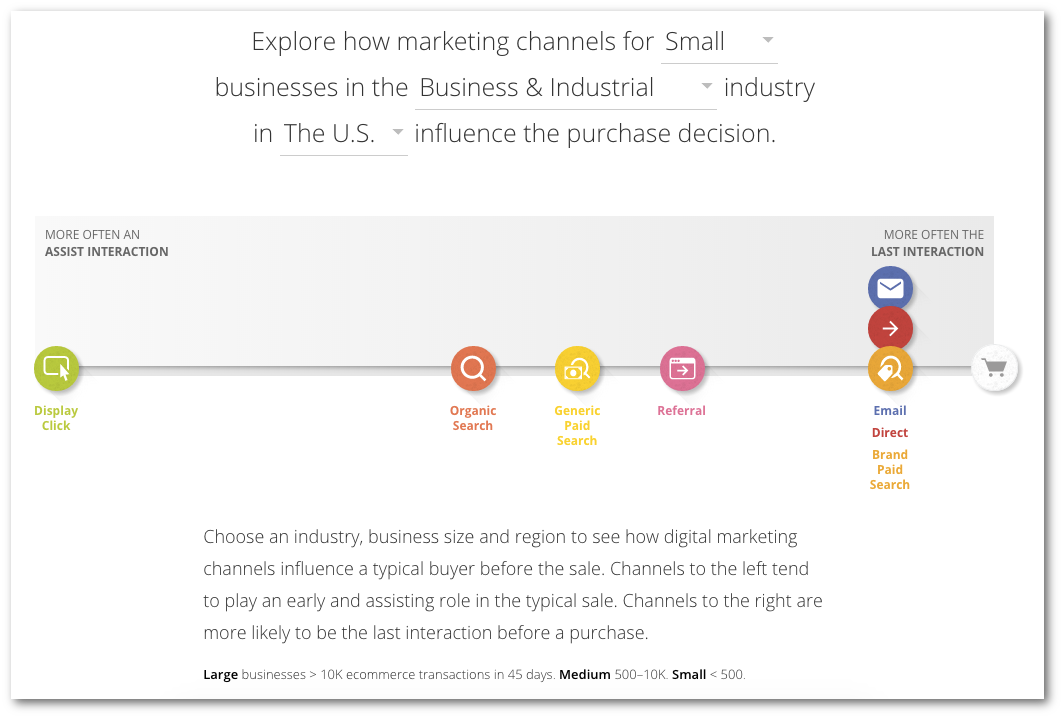
This can be best illustrated with the help of Google's Customer Journey to Online Purchase, which shows how a typical customer's journey might look (including which channels influence which parts) for most industries. Yay visuals!

journey-to-online-purchase-google


The point is, there are many things involved in a single conversion. Whether we're talking about a product purchased or lead generated.


Unfortunately, ad campaigns today can't be simple, static paths from New Visitor -> Conversion. Not in a world where it takes a minimum of 6-8 customer touch points prior to conversion. Or when your most profitable customers are NOT the ones who visit your site 1-3 times, but 14-20 before signing up.


Today's ad campaigns are more like a delicate system of variables that depend on each other for success. (Enter your best 'synergistic' MBA speak here.)


Making sure those things come together harmoniously is the best way to boost conversion rates for the long-term.


Here's how.


1. Create Different Ad Campaigns for Each Customer Journey Stage


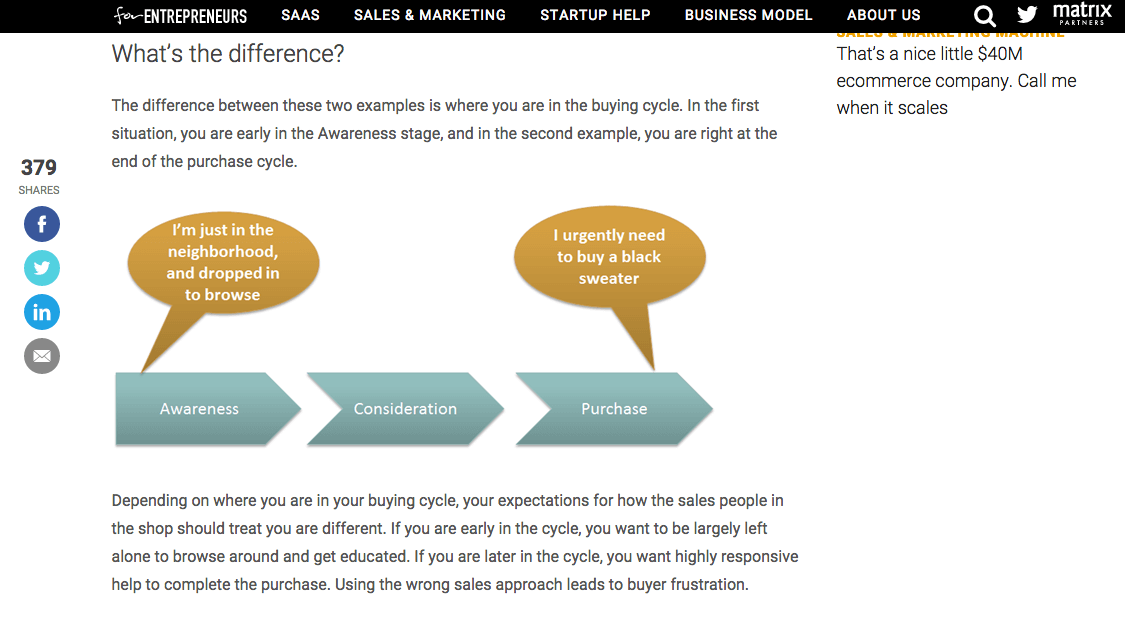
Ad campaigns should align with an appropriate stage of the sales funnel. Same as any inbound deliverable like an infographic, offline tradeshow, or other campaign.


You know, that whole Awareness, Consideration, Decision bit?


(If you have NO idea what I'm talking about, read about the buying cycle and triggers from David Skok. And then spend another 20 minutes reading everything else he writes – it's worth it.)

buying-cycles-for-entrepreneurs


Ad channels (and even different campaigns on the same channel) can then be used for different purposes, whether that's driving new sales to generating leads or simply boosting awareness. The opportunities are vast, but the execution needs to be precise.


ad-channels-sales-lead-awareness-distribution


Let's start with generating initial awareness to see how this works.


Demand Generation


The goal here is to bring in new, targeted visitors. Obviously.


Problem? Nobody knows who you are. And frankly, they don't really care. They haven't yet become aware that they have a need for you yet.


So help them. Literally.


Start with their daily life. What issues pop up, take too long, or cause them frustration (that can also possibly tie back into your widgets)?


Listen:


Consumers ignore 86% of display ads. And those average banner ad click through rates are a dismal 0.1%. It ain't easy out there.


Botching this jeopardizes everything else. So your value proposition needs to be awesome. Not good, or great. But, “Holy s$*% I need to [click this link / read this post] right now”.


Typical display ads, AdWords, and Facebook are well tread options. So let's look at new, fresh examples like Twitter and Instagram. Less competition typically = less expensive = higher return on ad spend. And the principles are the same, regardless of channel.


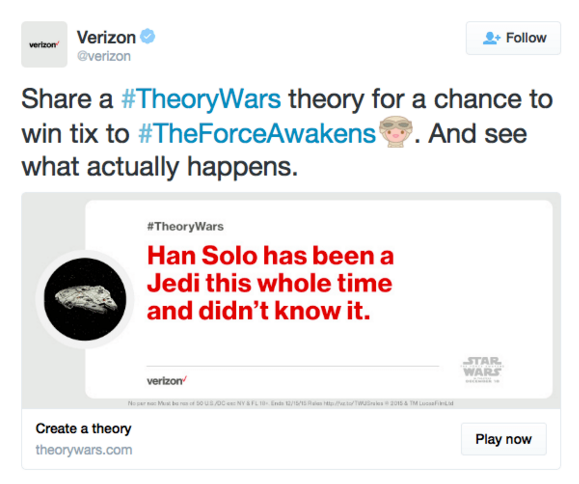
For example, let's say you're trying to get the attention on Twitter. Instead of simply promoting your account (and making it all about you), solving a huge pain point or even providing a fun distraction can be enough to start introducing your brand to consumers.

verizon-twitter-ad-star-wars


The best social ads at this stage also 'blend' in with the content people are already consuming. You know, like that whole native advertising thing. For example, this one from I.D. Sarrieri is very Instagram-ish – selling a mood or theme featuring their products.


idsarrieri-instagram-ad


Find this one, and many more great Instagram ad examples here.


Last but certainly not least, is your headline.


The best headlines are a crystallized version of your value proposition, and they tap into some deeper primal motivation to grab maximum attention. Bnonn's SHINE headline formula is a great way to get started, giving you the 'essential' ingredients like Specificity and Immediacy that are critical to getting people to take action.


You can also study the masters like BuzzFeed, who crank out brilliant headlines day-after-day that can be templated for re-using later. For example:


buzzfeed-headline-article


This one might look like:


  • # + [Perfect Adjective] + [Noun/Keyphrase Solution] + [To/For/Like] + [Fix Your Undesirable Thing]


Lead Generation


Once you've captured attention, the next step is to get them interested.


You do that by constructing a 'bridge' between their problems or pain points, and your widget which can ultimately solve those things for them.


One of the most popular techniques here is some kind of 'lead magnet' to generate a micro-conversion like a basic email address. Chances are, you're familiar with all the usual suspects like eBooks, webinars, checklists, and more.


But 'content' based offers can mean much more.


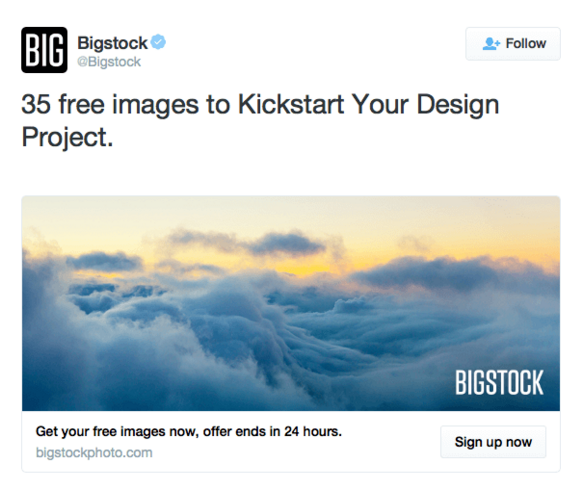
For example, most designers are starved for stock photos, especially with the exorbitant costs at the well known sources.


Here, Bigstock is providing 35 free!

bigstock-free-photos-twitter-ad


(Here are a few more Twitter ad examples to browse for inspiration.)


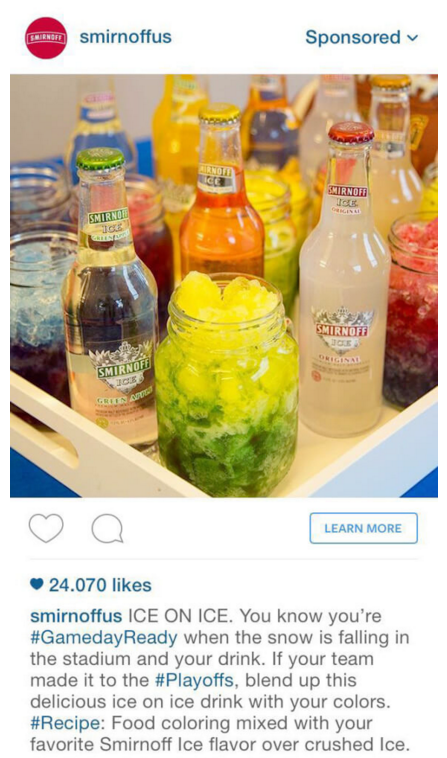
Even something as simple as a recipe could work wonders because it blends (pun intended) an offer to get attention with the products they'll need (and can purchase from you).


Smirnoff's example below is a perfect example of bridging the gap between those two worlds.

smirnoffus-instagram-ad


Closing Customers


By this point, prospects should know who you are and at least have some interest in your product.


Otherwise, we run into that original problem of trying to convert cold, unaware leads (which all of the best tactical practices in the world can't help).


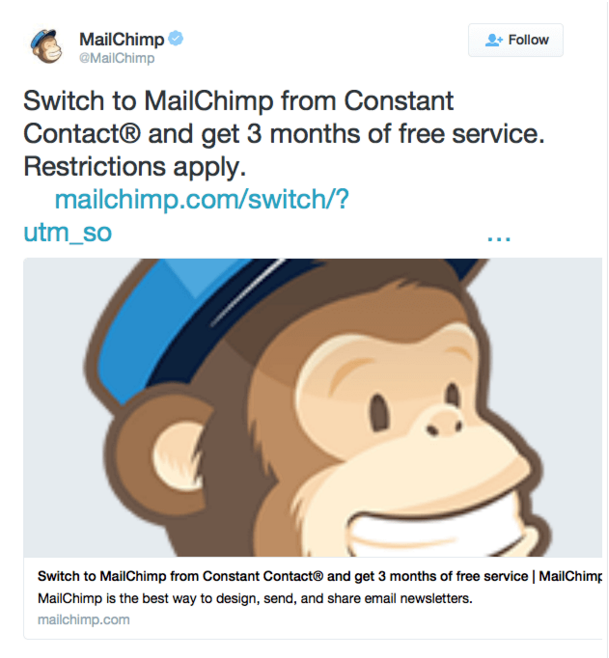
The key? Make them an offer they can't refuse. Especially if switching costs are an issue.


For example, MailChimp executes brilliantly by running a competitive offer to Constant Contact peeps with a free three month offer. That should help soften the blow of having to move all email templates and contact records, while also giving those people enough time to settle in with the service.

mailchimp-3-months-free-twitter-ad


(The actual content and CTA looks a little sloppy, but the overall offer is great.)


Admittedly, selling on Instagram is a, well, tough sell. It's still early days, and the channel is mostly known for brand awareness.


But still, the Cromwell in Las Vegas does as good a job as any, highlighting their attractive property in a multi-ad set with an appropriate CTA.


cromwellvegas-instagram


If you've done all the hard work up to this point (like getting awareness, building interest, and developing trust), the sales offer should be simple and straightforward.


A great offer or promotion can help, but shouldn't be required to get people to open up their wallets.


But if it is still difficult or damn near impossible, this next section can help.


2. Pinpoint & Upgrade Underperforming Stages


Creating different ad campaigns for specific sales funnel stages can help illustrate potential gaps, making it easier to break down exactly where you're excelling (or falling short).


That way instead of overreacting and making rash conclusions, you can start measuring those micro-conversions between stages or steps to find leading indicators of success.


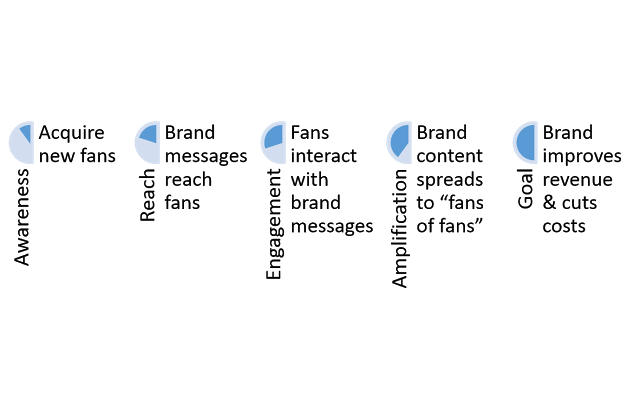
For example, experiencing low sales but demand seems to be there? Insert more lead gen and nurturing campaigns into the mix to bridge that gap. The end result, should resemble a complete 'customer journey' that seamlessly moves people from one step to the next.

customer-journey-brand


But what if those things check out, and still nothing. You've got ad campaigns targeting each step, and they seem to be performing well. Except for that whole sales thing.


Break your ad campaigns down even further into the individual variables that dictate success.


Google AdWord's Quality Score is kinda the gold standard for using algorithms to award and set pricing in an auction based ad system. Facebook has also been testing different algorithms that act similarly.


What's unique, is that these algorithms use factors like ad relevancy from the ads you're running, to the keyphrases or audiences, and even through the landing pages. They factor all of these details, and then create a holistic score that dictates (a) how often your ads show and (b) what you're going to pay.


Algorithms like these force advertisers to consider how every single ad campaign element works together to produce the best ROI (instead of simply focusing on the single ad creative you're working on).


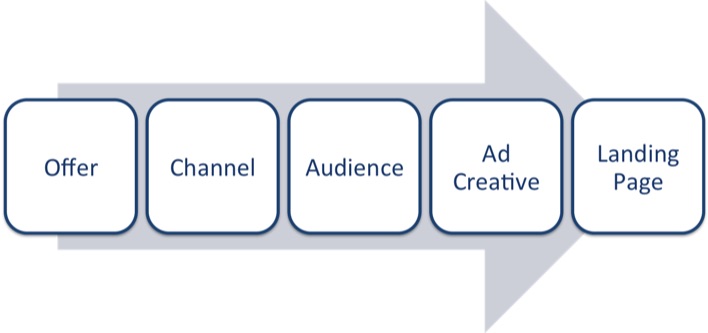
So let's start with the tactics, and work backwards to see if we can get any quick wins.

offer-to-landing-page-stages


Addressing or changing elements like the ad creative and landing page are far easier than ripping up the offer and starting from scratch. You can A/B test these elements according to commonly accepted best practices (which take all of 5 minutes Googling).


And it's the easiest, 'low hanging fruit' to quickly improve your Quality Score (or similar relevancy scores in other social ad platforms) that deliver fast results.


If issues still persist, take another step back to address the audience you're targeting (or keyphrases in AdWords which inherently have a certain type of audience searching). Chances are, improving audience targeting could give you that breakthrough.


For example, custom audiences on Facebook help you get more specific by targeting segments of past customers, retargeting website visits, or even the individual product page visited. Target saw a “20% increase in conversion [using Facebook's Dynamic Product Ads] compared to other Facebook ads”, according to Senior Vice President Kristi Argyilan.


Assuming your offer or value proposition is sound and that the channel is appropriate, iterating on the audience, ad creative, and landing pages should deliver something at the end of the day.


Otherwise, you have bigger issues (beyond advertising) that are holding you back.


Conclusion


The tactical best practices you read about all over the interwebs are important.


But only to a point.


Breaking things down by sales funnel stages can help you determine where you're excelling or falling short in key categories. They alert you to gaps in the customer journey that can cause breakdowns in driving new sales.


Once that's completed, you can get even more granular by looking at each independent variable within a single ad campaign to see where further bottlenecks are choking results. Working backwards from the ad creative and landing pages to your audience will give your campaigns a quick lift (assuming your offer or value proposition + channel selection check out).


Big conversion increases don't happen overnight by swapping out your headline or button color. They come from iterating on these tiny details along the way, making small improvements at each little step.


And best of all, isolating different variables helps assign priority, keeping execution focused and simple in an increasingly complex world.


About the Author: Brad Smith is a founding partner at Codeless Interactive, a digital agency specializing in creating personalized customer experiences. Brad's blog also features more marketing thoughts, opinions and the occasional insight.

How Infographics Can Improve Your SEO!

In the highly visual business world of today, the infographic (or infographics) that you use can make the difference between your online visibility and the stagnation of your marketing efforts.


Here are just a few of the ways in which using the right infographic(s) improves your search engine optimization (SEO) endeavors.


Cleveland SEO Guy
Danny Todd (a.k.a. “Cleveland SEO Guy”) defines infographics this way, “Infographics are cleverly illustrated, colorful, easy-to-read, and often vertically-oriented images, showing charts, graphs, figures, and other useful information.

Chances are that you've seen a few in the last week. Though written content should be the cornerstone of your content marketing strategy, don't underutilize infographics. They have their advantages.”


Quick Observations of an Effective Infographic


Let's take a look at the infographic to the left, to get us going on the topic of infographics. It is called the “Top 5 Male Athlete Hairstyles (Infographic)” and it is an infographic by the team at Men's Hairstyles Club.

Infographic


What can we learn by looking at this infographic?


  • Infographics can be made to share any message or topic. I mean, would you have thought of hairstyles for men?

  • Infographics can be long and vertical. (They can also be wide and horizontal!) In other words, infographics can come in many sizes and shapes.

  • Infographics tend to include text and additional images (and sometimes statistics or how-to steps, like this one does).


Benefits of Infographics (to SEO Endeavors)


So, what is the big deal with the SEO benefit(s)? Glad you asked! That is what we are presenting in the rest of this article!


And, it includes some expert tips from those “in the know.”


Benefit 1: Make the ranking process easier.


Get your page listed in the “image search” of search engines. You don't have to be limited to only the default text search.


The Google image search is just as powerful as the text search, and people will be able to find you on two lists instead of just one.

The image database is generally smaller (as compared to text search), meaning that you automatically put yourself in a better position by even using images in the first place. If the images are relevant, you have an even better chance at doing well in the search engine(s).


Let's not forget about Bing image search. After all, there is not only “one” game in town when it comes to searching the web. :)


Janette Speyer According to Janette Speyer (Partner at Web Success Team and Hot Ice Media), “If you use Google, you have the option to search for images. Once you put alt tags, keywords, and titles on your infographics, your blog will be more easily found [in the image search].

If your blog gets very little traffic, you have the advantage of [using] the images (infographics) to make up for it.” Hopefully, this moves you up to where you need to be in the ranking!

Benefit 2: Benefit by social interaction (and the resulting SEO ranking).


Gain visual recognition with your potential viewer. This leads to interaction which leads to better rankings.


As a part of that interaction, give the audience (people) something to talk about, which is the name of the game for a really well-constructed infographic.


David Leonhardt
According to David Leonhardt (President, THGM Writers), “SEO is highly dependent on the perceptions of online 'publishers.'

By publishers, I mean anybody from the New York Times to my uncle, when he posts to Facebook. Every time a company is mentioned in an article or in a tweet, it helps the SEO effort. Infographics give people something to talk about, or from an SEO perspective, a reason to talk about you.”


The major search engines are constantly determining the relevance of your content by the human reaction to it. Pictures ensure that more people interact with the content.

This is simply a fact because people react and interact with media. (Remember the saying, “A picture is worth a thousand words?”)


Cleveland SEO Guy
On the topic of social sharing and delivering the message, Danny Todd says, “For one, they stand out amidst a sea of text. Website visitors can quickly differentiate between an ordinary picture and an infographic.

Using them just often enough keeps things interesting. They also make it easy to compress and simplify what might otherwise be exceedingly complex information, reducing extraneous details and distilling the crucial facts into an easy-to-understand format.

If your infographics are relevant and informative (as all your content should be), they're likely to be shared on social media.”


The human interaction (and reaction) pushes your content up in the search engine listings. It also gives you more organic click-throughs, a statistic that will help your ranking improve even more, in the long run.

Benefit 3: Gain the ability to use more tags.


Pictures can have tags just as easily as any other content. This option helps those of you who want to raise the count of a certain keyword on your webpage without turning what could have been an excellent article into a keyword-soaked piece of worthless dribble. How? Include infographics!


By doing this (including an infographic), you may then use the tags that are inherent in the picture as another excuse to put the keyword on your page. Google and the other major search engines will recognize this as a valid use of your keyword and associate your page more readily with it. The more easily that your page connects with a keyword, the higher your search ranking goes.


Helpful Tips from the Experts


When asking our Expert Panel what else they would recommend, regarding infographics (beyond just SEO), they gave us the following tips.

Keep It Simple (Content)


David LeonhardtAccording to David Leonhardt, “Keep it simple. If you want people to talk about you, give them something simple that they will understand.


Don't try to create the longest Infographic of the 'Everything about…[such and such]' variety. Assemble a few pieces of interesting data that are tightly related, to form a single idea.”


Keep It Easy (Production)


David LeonhardtDavid Leonhardt continues, “The design does not have to be fancy, either. My most successful Infographic ever was made in a simple table format that I had whipped up on Fiverr. It will never win a beauty contest, and just might be in line to enter an ugly contest (but it looks better on Slideshare).


The key to its success is that the idea is simple and captivating, and people have been sharing it ever since.”


Gain Exposure for Your Brand


Cleveland SEO GuyAccording to Danny Todd, “Content marketing with infographics has grown rapidly in recent times, with little sign that readers are growing tired of them. The ability to condense a lot of information into a simple graphic makes them easy to follow, but the infographics can still impart well-researched knowledge.


For the content creator, an infographic can spread across the web, providing branding and SEO benefits that can last long into the future. Businesses that ignored the trend will be wondering whether they should get started with infographics now. Read more…”


Janette Speyer
Janette Speyer offers this tip: “I also share my images on authority websites like Instagram, Pinterest, and more. This gives me more opportunities to be found. The ultimate goal is for people to see my blog, right? Any way you can post or syndicate those images will increase your chances of being seen.”


Expert Panel


Wondering who these experts are? Wanting to find them so that you can follow them on social media and learn more amazing tips?


Well, you've arrived at the right place. Here is a short listing of their biographies and social media links, for your convenience. This was made easier through the use of the wonderful online tool, MyBlogU. Thanks, MyBlogU!


David Leonhardt (President, THGM Writers)


David LeonhardtInfographics have never been central to my SEO efforts. But I have created (well, supervised the creation of) at least a dozen Infographics in my day.


These have covered fields as diverse as tech, housing, and fertility. Done properly, Infographics can be an effective form of content marketing.


Twitter: twitter.com/amabaie

LinkedIn: linkedin.com/in/davidleonhardt

Website: thgmwriters.com


Danny Todd (a.k.a. the Cleveland SEO Guy)


Cleveland SEO Guy

I am known as the Cleveland SEO Guy. I started in the SEO business in the 1990s when it was a far less complicated industry. Over the years, I've formed relationships with some of the leading SEO experts in the business.


In doing so, I've learned SEO secrets that very few in the SEO services business actually know. This is why I consistently rank sites in the top 10 results on Google for competitive terms, while some of my competitors struggle to achieve top 100 listings.


Twitter: twitter.com/clevelandseoguy

LinkedIn: linkedin.com/company/the-cleveland-seo-guy

Website: clevelandseoguy.com


Janette Speyer (Graphic Artist)


Janette Speyer

I started my career as a graphic artist. In early 2000, I merged my business into the digital space. At that time graphics were not searchable, so we avoided them like the plague. As more social media platforms made their way into the world, images became not only a must but a necessity.


I took to adding infographics to my blogs for those that wanted just a quick visual of what I was writing about at the time. I developed many graphics and used social media to bring more traffic to my website. The images boosted my traffic by a good thirty percent (30%).


Twitter: twitter.com/websuccess

LinkedIn: linkedin.com/company/web-success-team

Website: hoticemedia.com


Conclusion


In short, use infographics whenever you can in your presentations online. You gain credibility with your audience and with the major search engines! Your content is more easily found, and you will improve your overall online marketing ROI (return-on-investment) simply by formatting your research in this way.

The post How Infographics Can Improve Your SEO! appeared first on SEO Chat.

How to Idiot Proof Your Ad Campaigns

Marketing promotion sucks when you treat people the same.


That goes for conversions, and it goes for advertising too.


But the minute things start to go awry, people start messing with their landing page headline or ad descriptions.


As if those tiny, miniscule elements are the primary reason traffic's not comin' or visits aren't convertin'.


The best landing page, optimized 100% correctly, can't make up for the wrong audience seeing that message.


Ad campaigns are already difficult. But the good news is that you don't need to possess ninja PPC skillz.


Instead, here is a dead simple way you can isolate where problem areas might pop up and stop them dead in their tracks.


When 'Best Practices' are Good Enough


Commonly accepted best practices are a starting point. The tip of a metaphorical iceberg.


They get all the attention and ink online. But there's a mountain below just waiting to sink your campaign.


On a GREAT day, landing pages convert around 10% of visitors (and those are the 'uncommon', special ones that vastly outperform all the rest). That means the majority of page visitors are doing, well, anything else besides converting.


Slapping on a different ad-description isn't going to budge that number. It won't change the fact that those people simply aren't ready to buy. It might get you from 6-7%. Which is great!


But in a world where over 50% of all customers interactions follow a 'multi-event, multi-channel' journey that takes various touch points prior to converting, we should look beyond tactical 'best practices' to make sure the entire funnel aligns to deliver the best conversions for our buck.


Managing the growing complexity is a top priority for marketers, with most juggling anywhere from 5 – 31 separate tools to manage messaging in a multi-channel marketing environment.


This can be best illustrated with the help of Google's Customer Journey to Online Purchase, which shows how a typical customer's journey might look (including which channels influence which parts) for most industries. Yay visuals!


journey-to-online-purchase-google


The point is, there are many things involved in a single conversion. Whether we're talking about a product purchased or lead generated.


Unfortunately, ad campaigns today can't be simple, static paths from New Visitor -> Conversion. Not in a world where it takes a minimum of 6-8 customer touch points prior to conversion. Or when your most profitable customers are NOT the ones who visit your site 1-3 times, but 14-20 before signing up.


Today's ad campaigns are more like a delicate system of variables that depend on each other for success. (Enter your best 'synergistic' MBA speak here.)


Making sure those things come together harmoniously is the best way to boost conversion rates for the long-term.


Here's how.


1. Create Different Ad Campaigns for Each Customer Journey Stage


Ad campaigns should align with an appropriate stage of the sales funnel. Same as any inbound deliverable like an infographic, offline tradeshow, or other campaign.


You know, that whole Awareness, Consideration, Decision bit?


(If you have NO idea what I'm talking about, read about the buying cycle and triggers from David Skok. And then spend another 20 minutes reading everything else he writes – it's worth it.)


buying-cycles-for-entrepreneurs


Ad channels (and even different campaigns on the same channel) can then be used for different purposes, whether that's driving new sales to generating leads or simply boosting awareness. The opportunities are vast, but the execution needs to be precise.


ad-channels-sales-lead-awareness-distribution


Let's start with generating initial awareness to see how this works.


Demand Generation


The goal here is to bring in new, targeted visitors. Obviously.


Problem? Nobody knows who you are. And frankly, they don't really care. They haven't yet become aware that they have a need for you yet.


So help them. Literally.


Start with their daily life. What issues pop up, take too long, or cause them frustration (that can also possibly tie back into your widgets)?


Listen:


Consumers ignore 86% of display ads. And those average banner ad click through rates are a dismal 0.1%. It ain't easy out there.


Botching this jeopardizes everything else. So your value proposition needs to be awesome. Not good, or great. But, “Holy s$*% I need to [click this link / read this post] right now”.


Typical display ads, AdWords, and Facebook are well tread options. So let's look at new, fresh examples like Twitter and Instagram. Less competition typically = less expensive = higher return on ad spend. And the principles are the same, regardless of channel.


For example, let's say you're trying to get the attention on Twitter. Instead of simply promoting your account (and making it all about you), solving a huge pain point or even providing a fun distraction can be enough to start introducing your brand to consumers.


verizon-twitter-ad-star-wars


The best social ads at this stage also 'blend' in with the content people are already consuming. You know, like that whole native advertising thing. For example, this one from I.D. Sarrieri is very Instagram-ish – selling a mood or theme featuring their products.


idsarrieri-instagram-ad


Find this one, and many more great Instagram ad examples here.


Last but certainly not least, is your headline.


The best headlines are a crystallized version of your value proposition, and they tap into some deeper primal motivation to grab maximum attention. Bnonn's SHINE headline formula is a great way to get started, giving you the 'essential' ingredients like Specificity and Immediacy that are critical to getting people to take action.


You can also study the masters like BuzzFeed, who crank out brilliant headlines day-after-day that can be templated for re-using later. For example:


buzzfeed-headline-article


This one might look like:


  • # + [Perfect Adjective] + [Noun/Keyphrase Solution] + [To/For/Like] + [Fix Your Undesirable Thing]


Lead Generation


Once you've captured attention, the next step is to get them interested.


You do that by constructing a 'bridge' between their problems or pain points, and your widget which can ultimately solve those things for them.


One of the most popular techniques here is some kind of 'lead magnet' to generate a micro-conversion like a basic email address. Chances are, you're familiar with all the usual suspects like eBooks, webinars, checklists, and more.


But 'content' based offers can mean much more.


For example, most designers are starved for stock photos, especially with the exorbitant costs at the well known sources.


Here, Bigstock is providing 35 free!


bigstock-free-photos-twitter-ad


(Here are a few more Twitter ad examples to browse for inspiration.)


Even something as simple as a recipe could work wonders because it blends (pun intended) an offer to get attention with the products they'll need (and can purchase from you).


Smirnoff's example below is a perfect example of bridging the gap between those two worlds.


smirnoffus-instagram-ad


Closing Customers


By this point, prospects should know who you are and at least have some interest in your product.


Otherwise, we run into that original problem of trying to convert cold, unaware leads (which all of the best tactical practices in the world can't help).


The key? Make them an offer they can't refuse. Especially if switching costs are an issue.


For example, MailChimp executes brilliantly by running a competitive offer to Constant Contact peeps with a free three month offer. That should help soften the blow of having to move all email templates and contact records, while also giving those people enough time to settle in with the service.


mailchimp-3-months-free-twitter-ad


(The actual content and CTA looks a little sloppy, but the overall offer is great.)


Admittedly, selling on Instagram is a, well, tough sell. It's still early days, and the channel is mostly known for brand awareness.


But still, the Cromwell in Las Vegas does as good a job as any, highlighting their attractive property in a multi-ad set with an appropriate CTA.


cromwellvegas-instagram


If you've done all the hard work up to this point (like getting awareness, building interest, and developing trust), the sales offer should be simple and straightforward.


A great offer or promotion can help, but shouldn't be required to get people to open up their wallets.


But if it is still difficult or damn near impossible, this next section can help.


2. Pinpoint & Upgrade Underperforming Stages


Creating different ad campaigns for specific sales funnel stages can help illustrate potential gaps, making it easier to break down exactly where you're excelling (or falling short).


That way instead of overreacting and making rash conclusions, you can start measuring those micro-conversions between stages or steps to find leading indicators of success.


For example, experiencing low sales but demand seems to be there? Insert more lead gen and nurturing campaigns into the mix to bridge that gap. The end result, should resemble a complete 'customer journey' that seamlessly moves people from one step to the next.


customer-journey-brand


But what if those things check out, and still nothing. You've got ad campaigns targeting each step, and they seem to be performing well. Except for that whole sales thing.


Break your ad campaigns down even further into the individual variables that dictate success.


Google AdWord's Quality Score is kinda the gold standard for using algorithms to award and set pricing in an auction based ad system. Facebook has also been testing different algorithms that act similarly.


What's unique, is that these algorithms use factors like ad relevancy from the ads you're running, to the keyphrases or audiences, and even through the landing pages. They factor all of these details, and then create a holistic score that dictates (a) how often your ads show and (b) what you're going to pay.


Algorithms like these force advertisers to consider how every single ad campaign element works together to produce the best ROI (instead of simply focusing on the single ad creative you're working on).


So let's start with the tactics, and work backwards to see if we can get any quick wins.


offer-to-landing-page-stages


Addressing or changing elements like the ad creative and landing page are far easier than ripping up the offer and starting from scratch. You can A/B test these elements according to commonly accepted best practices (which take all of 5 minutes Googling).


And it's the easiest, 'low hanging fruit' to quickly improve your Quality Score (or similar relevancy scores in other social ad platforms) that deliver fast results.


If issues still persist, take another step back to address the audience you're targeting (or keyphrases in AdWords which inherently have a certain type of audience searching). Chances are, improving audience targeting could give you that breakthrough.


For example, custom audiences on Facebook help you get more specific by targeting segments of past customers, retargeting website visits, or even the individual product page visited. Target saw a “20% increase in conversion [using Facebook's Dynamic Product Ads] compared to other Facebook ads”, according to Senior Vice President Kristi Argyilan.


Assuming your offer or value proposition is sound and that the channel is appropriate, iterating on the audience, ad creative, and landing pages should deliver something at the end of the day.


Otherwise, you have bigger issues (beyond advertising) that are holding you back.


Conclusion


The tactical best practices you read about all over the interwebs are important.


But only to a point.


Breaking things down by sales funnel stages can help you determine where you're excelling or falling short in key categories. They alert you to gaps in the customer journey that can cause breakdowns in driving new sales.


Once that's completed, you can get even more granular by looking at each independent variable within a single ad campaign to see where further bottlenecks are choking results. Working backwards from the ad creative and landing pages to your audience will give your campaigns a quick lift (assuming your offer or value proposition + channel selection check out).


Big conversion increases don't happen overnight by swapping out your headline or button color. They come from iterating on these tiny details along the way, making small improvements at each little step.


And best of all, isolating different variables helps assign priority, keeping execution focused and simple in an increasingly complex world.


About the Author: Brad Smith is a founding partner at Codeless Interactive, a digital agency specializing in creating personalized customer experiences. Brad's blog also features more marketing thoughts, opinions and the occasional insight.

How Infographics Can Improve Your SEO!

In the highly visual business world of today, the infographic (or infographics) that you use can make the difference between your online visibility and the stagnation of your marketing efforts.


Here are just a few of the ways in which using the right infographic(s) improves your search engine optimization (SEO) endeavors.


Cleveland SEO Guy
Danny Todd (a.k.a. “Cleveland SEO Guy”) defines infographics this way, “Infographics are cleverly illustrated, colorful, easy-to-read, and often vertically-oriented images, showing charts, graphs, figures, and other useful information.

Chances are that you've seen a few in the last week. Though written content should be the cornerstone of your content marketing strategy, don't underutilize infographics. They have their advantages.”


Quick Observations of an Effective Infographic


Let's take a look at the infographic to the left, to get us going on the topic of infographics. It is called the “Top 5 Male Athlete Hairstyles (Infographic)” and it is an infographic by the team at Men's Hairstyles Club.

Infographic


What can we learn by looking at this infographic?


  • Infographics can be made to share any message or topic. I mean, would you have thought of hairstyles for men?

  • Infographics can be long and vertical. (They can also be wide and horizontal!) In other words, infographics can come in many sizes and shapes.

  • Infographics tend to include text and additional images (and sometimes statistics or how-to steps, like this one does).


Benefits of Infographics (to SEO Endeavors)


So, what is the big deal with the SEO benefit(s)? Glad you asked! That is what we are presenting in the rest of this article!


And, it includes some expert tips from those “in the know.”


Benefit 1: Make the ranking process easier.


Get your page listed in the “image search” of search engines. You don't have to be limited to only the default text search.


The Google image search is just as powerful as the text search, and people will be able to find you on two lists instead of just one.

The image database is generally smaller (as compared to text search), meaning that you automatically put yourself in a better position by even using images in the first place. If the images are relevant, you have an even better chance at doing well in the search engine(s).


Let's not forget about Bing image search. After all, there is not only “one” game in town when it comes to searching the web. :)


Janette Speyer According to Janette Speyer (Partner at Web Success Team and Hot Ice Media), “If you use Google, you have the option to search for images. Once you put alt tags, keywords, and titles on your infographics, your blog will be more easily found [in the image search].

If your blog gets very little traffic, you have the advantage of [using] the images (infographics) to make up for it.” Hopefully, this moves you up to where you need to be in the ranking!

Benefit 2: Benefit by social interaction (and the resulting SEO ranking).


Gain visual recognition with your potential viewer. This leads to interaction which leads to better rankings.


As a part of that interaction, give the audience (people) something to talk about, which is the name of the game for a really well-constructed infographic.


David Leonhardt
According to David Leonhardt (President, THGM Writers), “SEO is highly dependent on the perceptions of online 'publishers.'

By publishers, I mean anybody from the New York Times to my uncle, when he posts to Facebook. Every time a company is mentioned in an article or in a tweet, it helps the SEO effort. Infographics give people something to talk about, or from an SEO perspective, a reason to talk about you.”


The major search engines are constantly determining the relevance of your content by the human reaction to it. Pictures ensure that more people interact with the content.

This is simply a fact because people react and interact with media. (Remember the saying, “A picture is worth a thousand words?”)


Cleveland SEO Guy
On the topic of social sharing and delivering the message, Danny Todd says, “For one, they stand out amidst a sea of text. Website visitors can quickly differentiate between an ordinary picture and an infographic.

Using them just often enough keeps things interesting. They also make it easy to compress and simplify what might otherwise be exceedingly complex information, reducing extraneous details and distilling the crucial facts into an easy-to-understand format.

If your infographics are relevant and informative (as all your content should be), they're likely to be shared on social media.”


The human interaction (and reaction) pushes your content up in the search engine listings. It also gives you more organic click-throughs, a statistic that will help your ranking improve even more, in the long run.

Benefit 3: Gain the ability to use more tags.


Pictures can have tags just as easily as any other content. This option helps those of you who want to raise the count of a certain keyword on your webpage without turning what could have been an excellent article into a keyword-soaked piece of worthless dribble. How? Include infographics!


By doing this (including an infographic), you may then use the tags that are inherent in the picture as another excuse to put the keyword on your page. Google and the other major search engines will recognize this as a valid use of your keyword and associate your page more readily with it. The more easily that your page connects with a keyword, the higher your search ranking goes.


Helpful Tips from the Experts


When asking our Expert Panel what else they would recommend, regarding infographics (beyond just SEO), they gave us the following tips.

Keep It Simple (Content)


David LeonhardtAccording to David Leonhardt, “Keep it simple. If you want people to talk about you, give them something simple that they will understand.


Don't try to create the longest Infographic of the 'Everything about…[such and such]' variety. Assemble a few pieces of interesting data that are tightly related, to form a single idea.”


Keep It Easy (Production)


David LeonhardtDavid Leonhardt continues, “The design does not have to be fancy, either. My most successful Infographic ever was made in a simple table format that I had whipped up on Fiverr. It will never win a beauty contest, and just might be in line to enter an ugly contest (but it looks better on Slideshare).


The key to its success is that the idea is simple and captivating, and people have been sharing it ever since.”


Gain Exposure for Your Brand


Cleveland SEO GuyAccording to Danny Todd, “Content marketing with infographics has grown rapidly in recent times, with little sign that readers are growing tired of them. The ability to condense a lot of information into a simple graphic makes them easy to follow, but the infographics can still impart well-researched knowledge.


For the content creator, an infographic can spread across the web, providing branding and SEO benefits that can last long into the future. Businesses that ignored the trend will be wondering whether they should get started with infographics now. Read more…”


Janette Speyer
Janette Speyer offers this tip: “I also share my images on authority websites like Instagram, Pinterest, and more. This gives me more opportunities to be found. The ultimate goal is for people to see my blog, right? Any way you can post or syndicate those images will increase your chances of being seen.”


Expert Panel


Wondering who these experts are? Wanting to find them so that you can follow them on social media and learn more amazing tips?


Well, you've arrived at the right place. Here is a short listing of their biographies and social media links, for your convenience. This was made easier through the use of the wonderful online tool, MyBlogU. Thanks, MyBlogU!


David Leonhardt (President, THGM Writers)


David LeonhardtInfographics have never been central to my SEO efforts. But I have created (well, supervised the creation of) at least a dozen Infographics in my day.


These have covered fields as diverse as tech, housing, and fertility. Done properly, Infographics can be an effective form of content marketing.


Twitter: twitter.com/amabaie

LinkedIn: linkedin.com/in/davidleonhardt

Website: thgmwriters.com


Danny Todd (a.k.a. the Cleveland SEO Guy)


Cleveland SEO Guy

I am known as the Cleveland SEO Guy. I started in the SEO business in the 1990s when it was a far less complicated industry. Over the years, I've formed relationships with some of the leading SEO experts in the business.


In doing so, I've learned SEO secrets that very few in the SEO services business actually know. This is why I consistently rank sites in the top 10 results on Google for competitive terms, while some of my competitors struggle to achieve top 100 listings.


Twitter: twitter.com/clevelandseoguy

LinkedIn: linkedin.com/company/the-cleveland-seo-guy

Website: clevelandseoguy.com


Janette Speyer (Graphic Artist)


Janette Speyer

I started my career as a graphic artist. In early 2000, I merged my business into the digital space. At that time graphics were not searchable, so we avoided them like the plague. As more social media platforms made their way into the world, images became not only a must but a necessity.


I took to adding infographics to my blogs for those that wanted just a quick visual of what I was writing about at the time. I developed many graphics and used social media to bring more traffic to my website. The images boosted my traffic by a good thirty percent (30%).


Twitter: twitter.com/websuccess

LinkedIn: linkedin.com/company/web-success-team

Website: hoticemedia.com


Conclusion


In short, use infographics whenever you can in your presentations online. You gain credibility with your audience and with the major search engines! Your content is more easily found, and you will improve your overall online marketing ROI (return-on-investment) simply by formatting your research in this way.

The post How Infographics Can Improve Your SEO! appeared first on SEO Chat.